

What is SEO?
In today’s digitally saturated world, simply having a website is no longer enough to guarantee visibility. Potential customers are actively searching for products, services, and information online, and how your business appears in these digital searches can dramatically impact your success. This is where Search Engine Optimisation, or SEO, becomes indispensable. While the term is widely used, its nuances and profound impact on online presence are often misunderstood. This comprehensive guide will demystify SEO, explaining what it is, how it works, and why it’s a critical component of any modern marketing strategy. Understanding SEO is the first step to unlocking significant website traffic and achieving sustainable online growth. The global SEO market is anticipated to grow at a compound annual growth rate (CAGR) of about 8.3% from 2024 to 2030, highlighting its escalating importance [Marketing LTB, 2025]. Furthermore, with mobile devices accounting for 72.59% of Google Search queries, optimizing for these platforms is paramount [Wots The Big Idea (WTBI), 2025].
1. So, what is SEO?
SEO stands for Search Engine Optimisation. At its core, it’s the strategic process of enhancing your website to improve its visibility and ranking on search engines. The ultimate goal is to attract more qualified organic search traffic by making your content as relevant and authoritative as possible to user queries. Unlike Paid Search campaigns, which require ongoing ad spend, SEO focuses on earning “free” placement in search engine results pages (SERPs). This sustained visibility can lead to a higher return on investment over time, making it a cornerstone of effective search marketing.
1.1 The definition of SEO
SEO is the practice of boosting organic search traffic to a website by increasing its visibility in the search engine results for relevant keywords and phrases. It’s a multifaceted discipline that involves optimising various aspects of a website and its online presence to satisfy both search engines and, more importantly, users. By focusing on quality content and technical excellence, SEO aims to position a piece of content at the forefront of what users find when they conduct searches.
1.2 What are organic results in SEO?
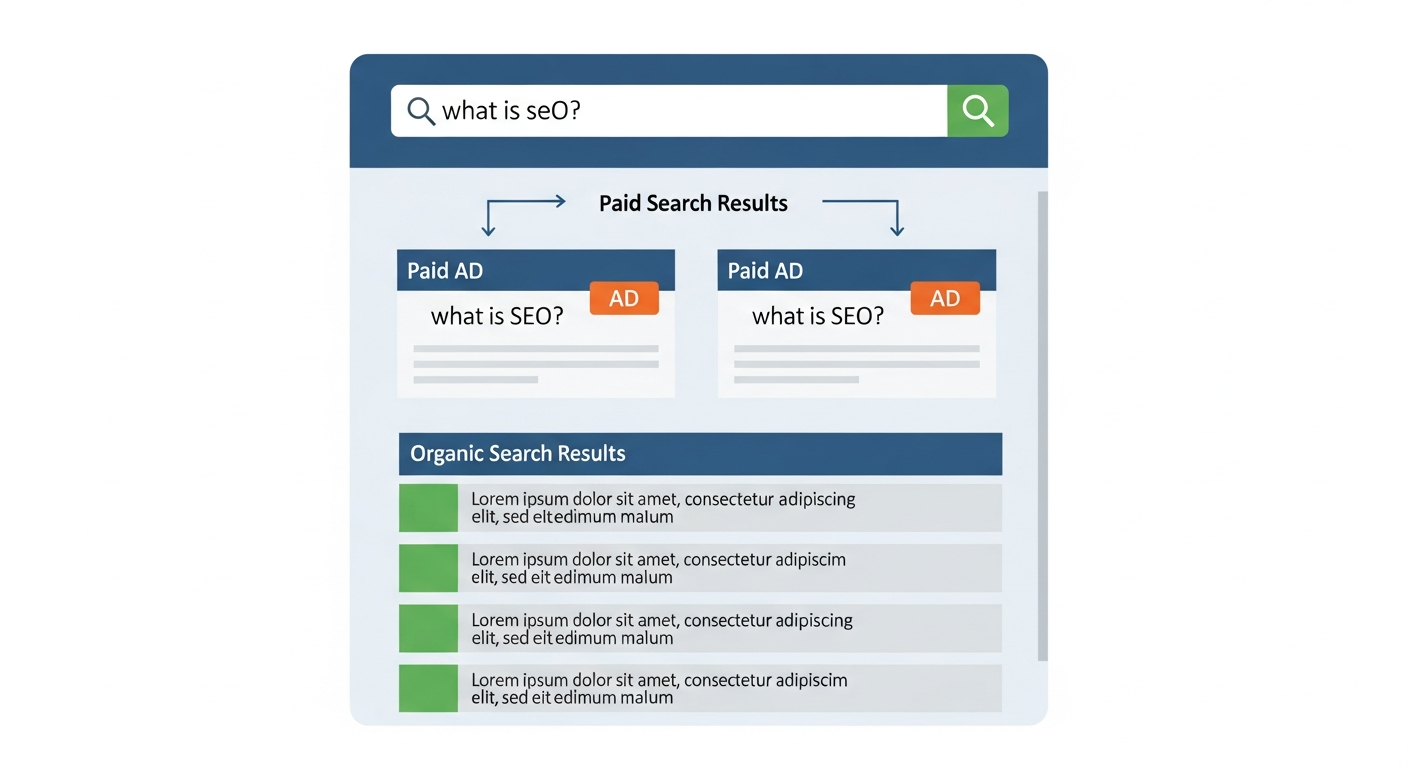 A typical Search Engine Results Page (SERP) features paid ads at the top, while organic results are earned through SEO and appear below.
SEO primarily focuses on improving a website’s performance in organic search results. These are the listings that appear on a Search Engine Results Page (SERP) as a direct result of a search engine’s algorithm evaluating the relevance and authority of a page for a specific query. Unlike paid advertisements, organic results are not influenced by direct payment. Instead, they are earned through a website’s perceived value and how well it answers the user’s Search Intent. According to Search Engine Journal, 49% of marketers state that organic search has the greatest Return On Investment of any marketing channel, underscoring its value.
1.3 What exactly is SEO Development?
SEO Development, also known as search engine optimization development, is the specialised practice of building and refining websites with the express purpose of making them highly visible and performant in search engines. It’s about creating a foundation that search engines can easily crawl, index, and rank. Key elements of SEO Development include conducting thorough keyword research, optimising on-page SEO elements, implementing effective link building strategies, improving metadata and Page Titles, developing an SEO-friendly site structure and URLs, enhancing website speed (also known as Site Speed), and ensuring a responsive, mobile-friendly website design. This holistic approach aims to attract and convert search traffic by ensuring the website is technically sound and offers superior user experiences.
2. How SEO works
Understanding how SEO functions requires a basic grasp of how search engines operate. Their primary directive is to deliver the most accurate, relevant, and valuable information to users based on their queries. SEO is the methodology that helps your website align with these criteria, thereby increasing its chances of being selected and displayed prominently in search results. It’s a continuous process of making your website more appealing and accessible to both automated search engine bots and human visitors.
2.1 SEO explained
Search Engine Optimisation is a strategic discipline within search marketing designed to improve a website’s visibility in organic search engine results. It’s not a single action but a collection of tactics aimed at making a website rank higher for specific queries. A fundamental aspect of effective SEO is keyword research, which involves identifying the terms and phrases your target audience uses when searching for products, services, or information related to your business. As Neil Patel notes, approximately 90% of SEO efforts revolve around proper keyword selection. By understanding what users are searching for, you can tailor your content marketing efforts.
Optimising on-page SEO is crucial. This involves enhancing the actual content of your web pages, including text, images, and video content. For text, this means providing valuable, informative content that directly addresses user queries, incorporating relevant keywords naturally, using effective headings, and including strong calls to action. Images and videos can be optimised using descriptive alt tags and file names.
Furthermore, a robust link building strategy is vital. Inbound links from reputable websites act as “votes of confidence,” signalling to search engines that your content is trustworthy and valuable. This is also referred to as Link Development. Off-page SEO encompasses these external signals of authority.
Technical SEO ensures that search engines can effectively crawl and index your site. This includes optimising site structure, improving website speed, ensuring mobile-friendliness, and fixing broken links. Tools like Google Search Console are invaluable for monitoring a website’s technical health and identifying potential issues that could hinder its ranking in organic search engine results.
2.2 How search engines work – crawling, indexing, and ranking
Search engines like Google Search operate through a sophisticated three-step process: crawling, indexing, and ranking. First, “crawlers” or “spiders” (like Googlebot) systematically explore the web, following links from page to page to discover new and updated content. This process gathers vast amounts of data about web pages, including keywords, content, links, and site structure.
Next, this collected information is processed and stored in a massive database known as the search index. Think of this index as a digital library where search engines keep track of all the web pages they have discovered. This indexing system allows them to quickly retrieve relevant information when a user performs a search.
Finally, when a user enters a query into a search engine, complex search algorithms analyze the query and then scan the search index to find the most relevant and authoritative pages. They consider hundreds of ranking factors to determine the order in which these pages will appear on the Search Engine Results Page (SERP). The goal of Search Engine Optimisation is to influence these ranking factors to ensure your website’s content is deemed highly relevant and valuable, thus appearing higher in the search results. Understanding this intricate process is fundamental to grasping why certain SEO tactics are effective in driving organic traffic.
2.3 How SEO works for business
For businesses, SEO is a powerful tool for driving qualified search traffic and ultimately increasing leads and sales. The fundamental principle is simple: when potential customers search for products or services you offer, your business needs to be visible in the search engine results. Organic search is a primary driver of website traffic, with studies indicating that a significant majority of online experiences begin with a search engine [Source: Wots The Big Idea (WTBI), 2025].
SEO for businesses typically breaks down into three interconnected pillars:
- Technical SEO: This ensures that search engines can effectively crawl, index, and understand your website. It involves optimising your site structure, ensuring fast website speed (Site Speed), making your site mobile-friendly, and ensuring that your site is indexable site. Tools like Google Search Console are essential for monitoring technical health and identifying issues such as broken links or duplicate content. An indexable site is paramount for appearing in search results.
- On-Page SEO: This pillar focuses on optimising the content and HTML source code of your web pages. It involves rigorous keyword research, creating high-quality content and relevant content that satisfies Search Intent, optimising Page Titles and meta descriptions, using header tags effectively, and implementing internal links to guide users and search engines through your site. The aim is to make each piece of content as valuable and relevant as possible.
- Off-Page SEO: This involves actions taken outside of your website to impact your rankings within search engine results pages. The most significant aspect is Link building, where other reputable websites link back to yours, signalling authority and trust. Local search optimisation is also a critical component for businesses with a physical presence, ensuring they appear in searches conducted in their geographical area. Understanding your IP Address can be relevant in some advanced local SEO strategies.
By effectively implementing these three pillars, businesses can improve their search rankings, attract more targeted search traffic, and build a stronger online presence, leading to increased customer acquisition and revenue.
3. Why is SEO important for marketing?
In the vast digital landscape, SEO is not just a technical aspect of web development; it’s a critical pillar of any comprehensive marketing strategy. Internet users conduct billions of searches daily to find information, products, and services. Your business’s ability to be found during these searches directly correlates with its potential to connect with new customers and grow. SEO complements other marketing channels by providing a continuous stream of qualified organic search traffic.
3.1 Do I need SEO?
If your business wants to be found online and attract quality website traffic, then yes, you absolutely need SEO. In fact, 68% of all online experiences begin with a search engine [Source: Wots The Big Idea (WTBI), 2025]. This statistic highlights the immense opportunity to capture potential customers at the precise moment they are actively seeking solutions your business can provide. Without a strategic SEO approach, you are essentially invisible to a vast segment of your potential audience. SEO makes your website more visible, leading to more opportunities to convert prospects into loyal customers. It’s an investment that pays dividends by consistently driving relevant search traffic.
3.2 What is good SEO?
Good SEO is synonymous with ethical, user-centric practices that aim to provide genuine value to users while adhering to search engine guidelines. In an increasingly competitive online environment, search engines have become sophisticated at detecting and penalising manipulative tactics, often referred to as black hat SEO. These unethical methods, such as keyword stuffing or cloaking, do not serve the user and ultimately lead to penalties, harming your website rankings.
Modern good SEO is built on three essential pillars that search engines consistently reward:
- Relevance: This means ensuring all your content is up-to-date, accurate, and directly addresses the Search Intent behind a user’s query. This is achieved through informative headings, strategic use of keywords, and a well-defined site structure. Creating quality content that provides comprehensive answers and insights is paramount.
- Authority: Authority is built through consistent creation of high-quality content, earning inbound links from reputable sources (Link building), and establishing your website as a trusted resource in your industry. Search engines favour sites that are recognised as leaders in their niche.
- User Experience: This encompasses how users interact with your website. Fast loading times (website speed, Site Speed), easy navigation, mobile-friendliness, and an intuitive website design all contribute to a positive user experience. A site that keeps users engaged and helps them find what they need quickly is more likely to rank well in organic search.
Good SEO is not about tricking search engines; it’s about optimising your website to be the best possible resource for your target audience, which in turn, signals to search engines that your site deserves a high ranking in search results.
3.3 How long does SEO take to show results?
The timeline for seeing SEO results can vary significantly, and there isn’t a one-size-fits-all answer. Factors such as the competitiveness of your niche, the current state of your website, the quality of your content marketing, and the effectiveness of your link building strategy all play a role. For some websites, initial improvements in search rankings might appear within a few weeks, particularly for less competitive keywords or in new niches. However, for more established and competitive markets, it can take several months for SEO efforts to yield substantial and lasting results.
It is crucial to understand that SEO is a long-term investment. While Paid Search campaigns can deliver immediate traffic, SEO builds sustainable organic traffic and website rankings over time. Patience, consistency, and working with experienced professionals or agencies are essential for navigating the SEO journey effectively and achieving meaningful search traffic growth. Investing in a long-term SEO solution is key to seeing sustained improvements.
Need SEO Results for Your Business?
Understanding SEO is fundamental for any business aiming to thrive online. We’ve explored what SEO stands for, the intricate workings of search engines, and the vital role of organic search traffic. By focusing on quality content, strategic keyword research, robust link building, and excellent on-page SEO, you can significantly enhance your website rankings and attract more qualified search traffic. While SEO takes time and consistent effort, the long-term benefits of increased visibility and sustainable website traffic make it an indispensable component of modern search marketing. If you’re ready to see tangible SEO results for your business, it’s time to invest in a comprehensive and ethical strategy.
Conclusion
Search Engine Optimisation (SEO) is far more than a buzzword; it’s the engine that drives online visibility and sustainable website traffic. By understanding how search engines like Google Search operate – through crawling, indexing, and ranking – businesses can strategically improve their standing in search results pages. The core of effective SEO lies in a commitment to providing quality content that satisfies Search Intent, complemented by technical excellence and authoritative signals like link building. Whether through on-page SEO optimisations, robust keyword research, or a well-defined site structure, every element contributes to a stronger online presence. While Paid Search offers immediate visibility, SEO provides a long-term, cost-effective path to consistent organic search traffic and improved website rankings. Embracing a comprehensive SEO strategy is not just about ranking higher; it’s about building trust, authority, and a seamless user experience that ultimately converts searches into loyal customers.