
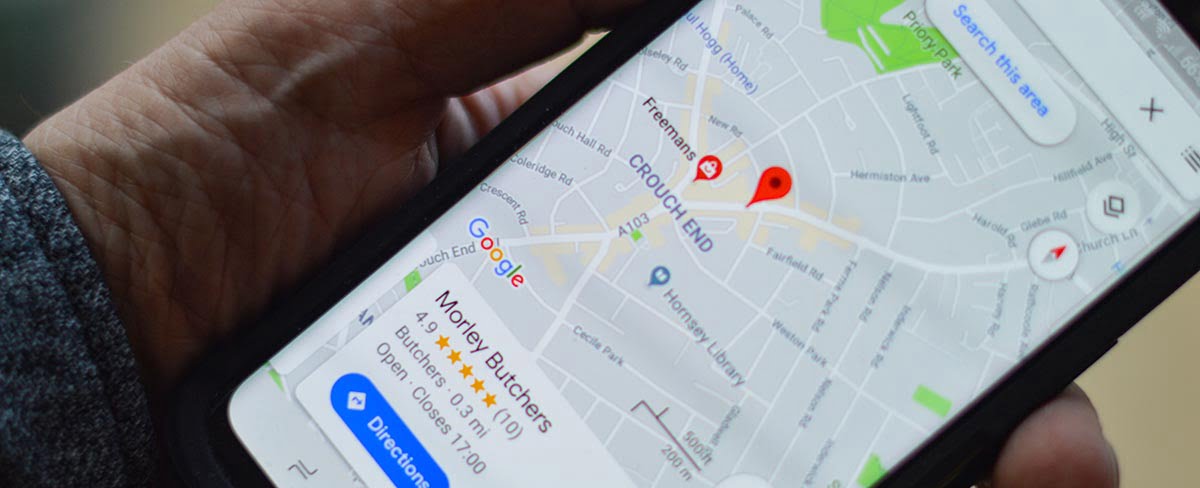
In today’s hyper-connected world, the way consumers find and interact with local businesses has fundamentally changed. Gone are the days when a Yellow Pages listing and word-of-mouth were enough. Now, the digital realm dictates discovery, making local SEO an indispensable pillar of digital marketing for any local business. Whether you’re a charming café in Cape Town or a plumbing service in Johannesburg, understanding and implementing effective local search engine optimization is no longer optional – it’s essential for survival and growth. This comprehensive guide will demystify the world of local SEO, offering actionable strategies to boost your online presence and connect with customers right in your backyard.
1. First Create a Google Business Profile Account
The cornerstone of any successful local SEO strategy is your Google Business Profile (formerly Google My Business). This free listing is your digital storefront on Google Search and Google Maps, acting as the primary gateway for potential customers seeking local services or products. A well-optimized business profile significantly influences your visibility in local search results, especially within the coveted Map Pack (also known as the local Pack or Google Map Pack).
To establish a strong foundation, the first critical step is to claim and verify your Google Business Profile. This involves navigating to the Google Business platform, entering your business name, address, and phone number (your NAP information), and selecting the appropriate business category. Verification typically involves receiving a postcard with a code at your physical address, or sometimes through phone or email verification. Once verified, thorough Google Business Profile Optimization is paramount. This includes adding high-quality photos and videos of your business, products, and team, detailing your business hours, services, and products offered. Crucially, ensure your NAP information is accurate and consistent across all online platforms. Engaging with the platform’s features, such as publishing Google Posts for updates, offers, or events, and actively responding to questions in the Google Q&A section, further enhances your Google Business Profile Listings and overall local search visibility.
2. Receive Regular Reviews from Happy Customers
Customer reviews are a powerful local ranking signal and a critical component of building trust and credibility for your local business. In fact, two in five consumers regularly check for reviews online when researching a local business. Positive online reviews, particularly those on your Google Business Profile, directly influence your placement in the Map Pack and can significantly sway purchasing decisions.
Encouraging satisfied customers to leave Google Reviews is a continuous effort. The most effective approach is often to ask for reviews directly at the point of sale or service completion, provided the experience was positive. Post-purchase emails or SMS messages inviting customers to share their experience can also be effective, but it’s wise to use internal surveys first to gauge satisfaction and avoid soliciting reviews from unhappy customers. When responding to customer reviews, professionalism is key. Always thank customers for positive feedback and address any negative comments or complaints constructively and empathetically. Acknowledging and resolving issues publicly can demonstrate excellent customer service and mitigate the impact of negative feedback, while also signaling to search engines that you are actively engaged with your customers.
3. Refine for Voice Search
As voice search capabilities become more sophisticated and prevalent, optimizing for conversational queries is no longer a futuristic concept but a present-day necessity for local SEO. People tend to phrase their mobile searches and voice queries differently than when typing. They often use longer, more natural language questions, starting with terms like “who,” “what,” “when,” “where,” “why,” and “how.”
To effectively refine for voice search, your content should naturally incorporate these conversational phrases and long-tail keywords. Understanding user intent behind these queries is crucial; voice searches are frequently made when a user needs immediate information or is looking to perform an action, such as finding a “plumber near me open now.” This means ensuring your NAP information is readily available, your business hours are accurate, and your service area is clearly defined on your Google Business Profile and website. Implementing structured data or schema markup, specifically local business schema, can also help search engines better understand the context of your business and its offerings, making it easier to serve your business in response to voice queries.
4. Produce Content From Local News Stories or Events
Creating local content that resonates with your community is a powerful local SEO strategy that can significantly enhance your local search visibility. By tapping into local news stories, upcoming local events, or community initiatives, you demonstrate a genuine connection to your area and provide relevant, valuable information to potential customers.
Consider developing blog posts or articles that discuss local happenings, offer insights into community issues, or highlight your business’s involvement in local charities or causes. This type of content creation not only attracts local search traffic but also positions your local business as an active and engaged member of the community. Furthermore, if your business operates in multiple locations or a wide service area, creating dedicated Location Pages on your website with unique, high-quality local content for each region can be highly effective. This allows you to target region-specific keywords and landmarks, further solidifying your online presence within those specific geographical markets.
5. Optimize Your Business Website for Mobile
The dominance of mobile searches cannot be overstated in the realm of local SEO. A staggering 75% of all mobile searches that display local intent produce in-store, offline visits within 24 hours. This statistic underscores the critical importance of having a mobile-optimized website. If your website is slow to load, difficult to navigate on a smartphone, or presents a poor user experience (UX), you risk losing a significant portion of potential customers.
Ensuring your website is mobile-friendly involves several key factors. Firstly, prioritize fast loading speeds, aiming for three seconds or less. Utilize larger, readable fonts and ensure images and copy are displayed concisely, incorporating only vital information for easy consumption on smaller screens. An intuitive user interface (UI) is also crucial for a seamless mobile UX. This includes clear navigation, easily tappable buttons, and a responsive design that adapts to various screen sizes. Furthermore, ensure your NAP information is prominently displayed on your mobile site and easily accessible, as users on mobile devices often need this information quickly to make a decision or contact your business.
6. Focus on Local Keywords
To effectively attract local customers through local search, your search engine optimization efforts must be centered around local keywords. These are the terms and phrases that potential customers in your geographic area are actually using when searching for businesses like yours on search engines. Utilizing tools like Google’s Keyword Planner, filtered by your specific location, can reveal popular search terms for your region.
Once identified, these locally relevant keywords should be strategically integrated across your website. This includes their inclusion in title tags, meta descriptions, header tags, and body copy. Beyond just the keywords themselves, enriching your content with references to region-specific landmarks, popular local spots, or community identifiers can further signal your local relevance to search engines. This practice not only improves your rankings in local search results but also makes your actual content more relatable and appealing to your target audience.
7. Update Location Pages or a Location-Specific “About Us” Page
For businesses operating in multiple locations or serving a broad geographical area, dedicated Location Pages are an indispensable element of your local SEO strategy. Each page should serve as a mini-hub for that specific branch, providing comprehensive and unique information. This typically includes accurate store hours, consistent NAP information (business name, address, phone number), customized descriptions that highlight local relevance, customer testimonials, current promotions, and details about parking availability. Embedding a Google Map on each location page also helps users find your physical premises easily.
It is critical to generate unique content for each Location Page to avoid issues with duplicate content, which can negatively impact your SEO performance. If your business operates from a single location, dedicating a robust “About Us” page that emphasizes your local roots, community involvement, and unique connection to the area can serve a similar purpose. This page should also prominently feature your NAP information and link to your Google Business Profile.
8. Leverage Online Business Directories
Beyond your Google Business Profile, listing your business across relevant online directories is a fundamental practice for improving your local search visibility and building a consistent online presence. Directories such as Yellow Pages, Hotfrog, Brabys, and numerous others act as crucial local citations. When your business is listed consistently and accurately across these platforms, it reinforces your legitimacy and location to search engines.
Ensuring your NAP information is identical across all directories is paramount to avoid duplicate content issues and confusion for both search engines and users. Each listing should also include a clear business name, address, phone number, a compelling description of your products or services, and importantly, a backlink to your website. These backlinks are valuable local link building opportunities and contribute to your website’s authority. Maintaining accurate listings in these business directories is a foundational step in strengthening your local SEO.
9. Focus on Link Signals to Get High-Quality Backlinks
Link building remains a significant factor in how search engines rank websites, and for local SEO, focusing on acquiring high-quality backlinks from relevant local sources is particularly impactful. Studies, such as those by Moz, indicate that link signals are among the most important determinants for ranking in the Map Pack and localized organic search results.
To acquire these valuable links, prioritize creating exceptional local content on your website that other local businesses, organizations, or publications would naturally want to reference and link to. Guest blogging on reputable local websites or industry-specific blogs can expose your business to new audiences and generate authoritative backlinks. Collaborating with local influencers is another effective method; by partnering with respected individuals in your community, you can encourage them to link back to your site, driving both traffic and improving your local ranking signals. Identifying local link building opportunities requires a proactive approach to community engagement and content promotion.
10. Design a Dedicated Webpage for Each Product or Service You Provide
To truly establish authority in specific areas and improve your local search engine optimization, it’s advisable to create dedicated webpages for each distinct product or service your local business offers, rather than consolidating all offerings onto a single page. This approach allows you to deeply target specific keywords and showcase your expertise in each niche.
When search engines crawl your site, having distinct pages for “emergency plumbing services,” “drain cleaning,” and “water heater repair,” for example, helps them understand that your business is a comprehensive authority in plumbing, rather than just a general service provider. This focused content strategy can significantly improve your chances of ranking for a wider array of highly specific local searches. If your business’s primary differentiator is multiple locations rather than diverse services, this principle can still apply by using location-specific copy and content on each Location Page, ensuring each page offers unique value and targets local search queries relevant to that specific area.
Local SEO Is Now More Important Than Ever
The local search landscape is dynamic, with search engines like Google continuously evolving their algorithms and introducing new SERP Features. Staying ahead of these changes is not just beneficial; it’s imperative for maintaining and enhancing your local search visibility. By diligently implementing these local SEO strategies, you can ensure your business capitalizes on lucrative local search queries and builds a robust online presence.
From optimizing your Google Business Profile and cultivating positive customer reviews to creating compelling local content and focusing on mobile-friendliness, each step contributes to a stronger overall search engine optimization effort. Embracing these best practices will not only improve your rankings in local search results and the highly sought-after Map Pack but also foster deeper connections with your local community, driving more qualified traffic, leads, and ultimately, business growth.
Conclusion
In an era where proximity and relevance reign supreme, mastering local SEO is no longer an option but a necessity for local businesses aiming to thrive. The strategies outlined—from perfecting your Google Business Profile and soliciting genuine customer reviews to crafting targeted local content and ensuring mobile-first indexing—collectively form a powerful framework for capturing the attention of nearby customers. By focusing on accurate NAP information, leveraging local citations, and understanding the nuances of local search patterns, you can significantly boost your local search visibility and drive tangible business results.
Remember, local search engine optimization is an ongoing process. Regularly review your Google Business Profile Listings, monitor your customer reviews, and adapt your strategies to the ever-evolving local algorithm. Tools like Google Search Console can provide valuable insights into your performance, helping you refine your approach. For businesses in South Africa or any region, embracing these tactics provides a competitive edge, ensuring that when a potential customer searches locally, your local business is precisely where they’ll find you. Don’t underestimate the power of being discoverable; it’s the first step to building lasting customer relationships and achieving sustained growth in your community.