

Introduction: Beyond the Hype – Why SEO’s Value Persists
In the ever-shifting sands of the digital marketing landscape, a perennial question echoes among businesses: “Is SEO still worth it in 2026?” With the rapid advancements in artificial intelligence, evolving search engine algorithms, and the constant clamor for attention, it’s natural to question the enduring relevance of Search Engine Optimization. Yet, dismissing SEO would be a critical oversight. Far from being obsolete, SEO remains a cornerstone strategy, delivering significant and measurable return on investment (ROI) for businesses that adapt and execute effectively. This article unpacks the persistent value of SEO in 2026, exploring its impact on traffic, conversions, brand awareness, and ultimately, your bottom line, while navigating the new frontiers shaped by AI and user behavior.
The Enduring Question: Doubts Amidst a Changing Digital Landscape
The digital marketing world is a dynamic ecosystem, perpetually reshaped by technological innovation and user behavior shifts. In 2026, the advent of sophisticated AI technologies, most notably within search engines like Google, has intensified skepticism about traditional SEO practices. This questioning isn’t entirely unfounded; the way users interact with search engines and the very structure of search results pages are undergoing transformation. Concerns often revolve around the perceived complexity of staying ahead of algorithm updates, the cost and time investment required, and whether SEO efforts will yield tangible results in a future increasingly dominated by AI-driven search experiences.
Setting the Record Straight: A Data-Driven Look at SEO’s ROI
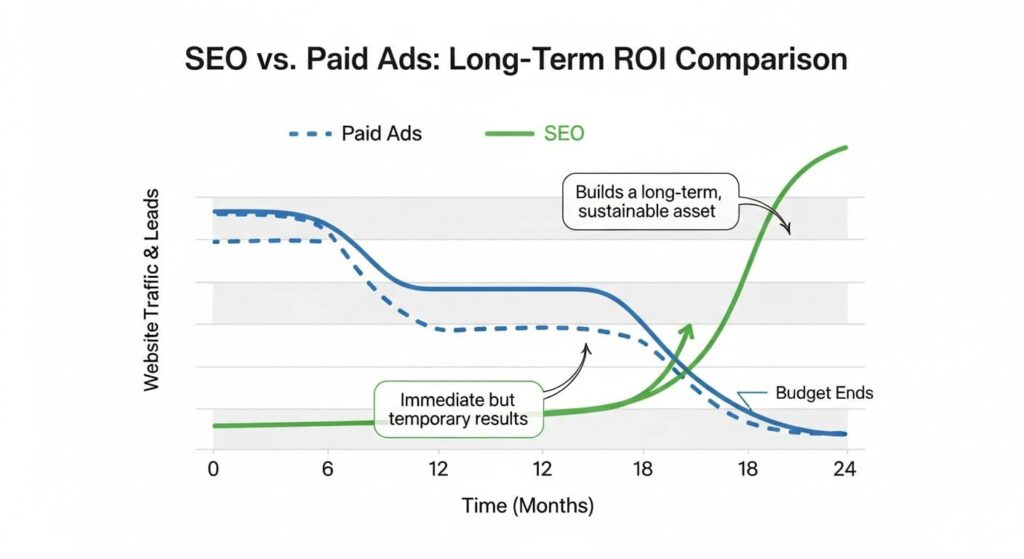
Despite these evolving dynamics, the data consistently underscores SEO’s potent ROI. Unlike fleeting paid ad campaigns that cease to deliver the moment budgets are exhausted, SEO builds sustainable, long-term value. Statistics frequently highlight that organic search remains a primary driver of website traffic, with users inherently trusting organic search results more than paid advertisements. Furthermore, the cost-effectiveness of SEO becomes increasingly apparent over time, often leading to a lower customer acquisition cost compared to other marketing channels. For businesses that invest strategically, SEO is not merely about visibility; it’s about cultivating an invaluable digital asset that drives qualified leads and profitable conversions.
The Evolving Search Landscape: Navigating AI, Algorithms, and User Behavior in 2026
The digital landscape is in constant flux, driven by sophisticated algorithms and evolving user behaviors. Understanding these shifts is crucial for any business aiming to maintain visibility and drive growth.
Google’s AI Ambitions: From Search Generative Experience (SGE) to Gemini
Google’s integration of artificial intelligence, particularly through features like Search Generative Experience (SGE) and the underlying Gemini models, is reshaping how users find information. These AI-powered features are designed to provide direct answers and generate summaries within the search results, potentially altering traditional click-through patterns to websites. This doesn’t negate SEO; rather, it necessitates an adaptation. Optimizing for AI-generated snippets requires a deeper focus on providing comprehensive, authoritative, and directly answerable content that aligns with user intent. The challenge is to be featured prominently, even if it’s within an AI-generated answer, and to still encourage users to delve deeper into your website for more detailed information.
The Rise of AI-Generated Content: Quality vs. Quantity in the AI Content Flood
The accessibility of AI tools has led to an explosion of AI-generated content. While this offers efficiency for content creation, it also poses a significant challenge: distinguishing valuable, human-centric content from the noise. Search engines, especially Google, are increasingly prioritizing content that demonstrates E-E-A-T (Experience, Expertise, Authoritativeness, Trustworthiness). This means that simply churning out AI-generated articles without human oversight, factual verification, or unique insights will likely fall by the wayside. The true differentiator in 2026 will be high-quality, original content that offers genuine value and addresses specific user needs with authority.
Core Search Principles Remain: User Intent and Authoritative Content Still Reign Supreme
Despite the technological shifts, the foundational principles of search engine optimization remain steadfast. At its heart, SEO is about understanding what users are looking for – their intent behind a specific search query. When a user types a search query into a search engine, they have a goal, whether it’s to find an answer, a product, or a service. The most successful SEO strategies are those that deeply understand and cater to this user intent. Consequently, the creation of authoritative, trustworthy, and relevant content that directly addresses these intents is more critical than ever. This focus on user value ensures that your website not only ranks well but also resonates with your target audience.
The Irrefutable Benefits: Why Organic Visibility is a Long-Term Business Asset
Investing in Search Engine Optimization yields a multitude of benefits that extend far beyond mere search engine rankings, building a robust digital foundation for sustained business growth.
Sustainable Organic Traffic: Beyond Fleeting Paid Ad Campaigns
One of SEO’s most compelling advantages is its ability to generate sustainable organic traffic. Unlike paid ads, which provide immediate but temporary visibility, successful SEO efforts result in a continuous flow of visitors to your website over the long term. This organic traffic is often highly qualified, as users are actively searching for the solutions your business offers. Building this consistent stream of visitors to your website creates an ongoing asset, reducing reliance on constant ad spend and fostering a more predictable customer acquisition channel.
Enhanced Brand Awareness and Credibility: Building Trust Through Top Rankings
Consistently appearing at the top of search results, particularly for relevant search queries, significantly enhances brand awareness and credibility. When users see your website frequently in search results pages for topics related to your industry, it fosters a perception of authority and trustworthiness. This increased brand awareness can translate into more direct searches for your brand and a greater willingness for potential customers to engage with your offerings. Being a recognized entity in the search landscape builds a foundation of trust that paid ads alone often struggle to achieve.
Improved User Experience (UX): A Core Pillar of Modern SEO
Modern SEO is intrinsically linked to user experience (UX). Search engines, especially Google, increasingly favor websites that provide a seamless and positive experience for visitors. This includes fast loading times, mobile-friendliness, intuitive navigation, and accessible content. Optimizing your website for SEO often means improving its overall usability, which not only satisfies search engine algorithms but also leads to higher engagement rates, lower bounce rates, and increased conversion rates. A website that is easy to use and provides a good experience keeps visitors engaged and encourages them to explore further.
Cost-Effectiveness: A Lower Customer Acquisition Cost Over Time
While initial SEO investments can require time and resources, their long-term cost-effectiveness is undeniable. Compared to the ongoing expenditure of paid advertising campaigns (such as Google Ads), organic traffic generated through SEO typically has a significantly lower customer acquisition cost (CAC) over time. Once a website achieves strong rankings, it continues to attract qualified leads without incurring per-click fees. This sustained, cost-efficient lead generation makes SEO a powerful strategy for maximizing marketing budgets and improving profitability.
Unpacking the ROI of SEO: From Clicks to Conversions
The true value of SEO lies not just in driving traffic, but in its ability to contribute directly to business objectives. Understanding and measuring this return is paramount.
Defining and Tracking SEO ROI: More Than Just Traffic
Measuring SEO ROI extends beyond simply tracking website traffic. While an increase in organic traffic is a positive indicator, it’s essential to link these efforts to tangible business outcomes. This involves defining what success looks like for your specific business goals. For lead generation focused businesses, this might mean tracking the number and quality of leads generated from organic search. For e-commerce sites, it’s about monitoring conversion rates and revenue directly attributable to organic traffic. The ultimate goal is to demonstrate how SEO contributes to revenue growth and business objectives.
Key Metrics for Measuring SEO Success
To effectively track SEO ROI, a suite of key metrics should be monitored:
- Organic Traffic: The number of visitors arriving from search engines.
- Conversion Rate: The percentage of organic visitors who complete a desired action (e.g., making a purchase, filling out a form).
- Leads Generated: The volume of qualified leads originating from organic search.
- Customer Acquisition Cost (CAC): The total cost of sales and marketing efforts to acquire a new customer, with a focus on the contribution of SEO.
- Keyword Rankings: Position in search results pages for target search queries.
- Website Authority: Metrics like Domain Authority and Page Authority, often influenced by quality backlinks.
- Bounce Rate and Time on Site: Indicators of user engagement and content relevance.
Calculating Your SEO ROI: A Practical Framework
A practical framework for calculating SEO ROI involves several steps:
- Determine Total SEO Investment: Include costs for tools, content creation, technical audits, link building, and agency/consultant fees.
- Attribute Revenue/Value to Organic Traffic: Use analytics to identify revenue or lead value generated by organic search visitors. This can involve tracking conversions, using revenue attribution models, or assigning a monetary value to leads.
- Calculate Gross Profit from Organic Efforts: Subtract the cost of goods sold or service delivery from the revenue generated by organic traffic.
- Calculate Net Profit: Subtract your total SEO investment from the gross profit.
- Calculate ROI: (Net Profit / Total SEO Investment) x 100%.
For example, if your SEO investment was $10,000, and it generated $50,000 in net profit through organic traffic, your ROI is 400%.
The Cost of Inaction: The Opportunity Lost by Neglecting SEO
Failing to invest in SEO in 2026 carries significant opportunity costs. Competitors who are actively optimizing their websites will capture the search traffic, leads, and potential customers that you are missing. This stagnation allows competitors to build brand awareness, establish authority, and gain market share, potentially making it much harder and more expensive to catch up later. The search results are a zero-sum game; if you are not visible, someone else is.
Strategic SEO Imperatives for Businesses in 2026
To thrive in the current search environment, businesses must adopt a modern, strategic approach to SEO, focusing on key pillars that drive sustainable results.
Mastering Modern Content Strategy: Quality, Intent, and E-E-A-T
Content remains the lifeblood of SEO. In 2026, this means a relentless focus on quality, deeply understanding user intent for every search query, and demonstrating E-E-A-T. Content should be original, insightful, and provide comprehensive answers to user needs. Leverage AI as a tool for research and efficiency, but ensure human expertise, experience, and editorial oversight are paramount to building trust and authority.
Technical SEO Foundations: Ensuring Your Website is Search-Engine Ready
A technically sound website is fundamental. This involves ensuring your website is easily crawlable and indexable by search engines, fast-loading, mobile-responsive, and secure (HTTPS). Addressing technical SEO issues ensures that search engine bots can effectively understand and rank your content, and that users have a seamless browsing experience. Neglecting technical SEO can severely limit the effectiveness of even the best content.
Building Authority with Link Building: Quality Over Quantity
Backlinks from reputable and relevant websites are a strong signal of authority to search engines. In 2026, the emphasis has shifted from acquiring a high volume of backlinks to earning high-quality, contextually relevant backlinks. Focus on creating shareable content that naturally attracts links from authoritative sources within your industry. This builds your website’s credibility and can significantly boost its ranking potential in search results.
The Power of Local SEO: Dominating Your Geographic Market
For businesses serving a specific geographic area, local SEO is indispensable. This involves optimizing your online presence to attract local customers searching for your products or services. Key elements include optimizing your Google Business Profile (formerly Google My Business), ensuring consistent NAP (Name, Address, Phone Number) information across directories, and gathering local reviews. Appearing in Google Maps and local search results can drive significant, high-intent traffic.
Optimizing for Voice Search and Emerging Search Behaviors
The rise of voice search and conversational AI means users are increasingly phrasing their search queries in natural, spoken language. Optimizing for these longer, more conversational search queries requires a content strategy that addresses questions directly and uses natural language. Anticipating emerging search behaviors, such as visual search, will also be crucial for future-proofing your SEO strategy.
Addressing the Skeptics: Common Misconceptions and Risks in SEO
It’s important to address common doubts and potential pitfalls associated with SEO to ensure a clear understanding of its value and execution.
“SEO is Too Expensive and Takes Too Long”: Setting Realistic Expectations
A common misconception is that SEO is prohibitively expensive and yields results only after years. While SEO is a long-term strategy that requires sustained effort and investment, its ROI typically surpasses that of short-term tactics over time. Realistic expectations are key: significant results often begin to materialize within 6-12 months, with ongoing optimization leading to compounding growth. The cost is relative to the immense value of sustained organic traffic and leads.
The Pitfalls of Poor SEO: Avoiding the “Dark Side”
Engaging in “black hat” SEO tactics, such as keyword stuffing, cloaking, or purchasing low-quality backlinks, can lead to severe penalties from search engines, including de-indexing from search results. These shortcuts may offer temporary gains but invariably lead to long-term damage, including loss of rankings, traffic, and trust. Ethical, user-centric SEO is the only sustainable path to success.
DIY vs. Professional Help: Knowing When to Invest in Expertise
For businesses with limited resources or expertise, attempting DIY SEO can be challenging and inefficient. While foundational knowledge is accessible, mastering technical SEO, advanced content strategy, and complex link-building requires specialized skills. Partnering with experienced SEO professionals or agencies can accelerate progress, ensure adherence to best practices, and maximize ROI, especially for businesses that need to drive measurable results.
SEO as a Force Multiplier: Synergies with Your Digital Marketing Mix
SEO does not operate in a vacuum; it amplifies the effectiveness of other digital marketing channels, creating a synergistic effect.
Complementing Paid Ads (Google Ads, Meta Ads): Maximizing Your Search Presence
SEO and paid advertising, such as Google Ads, can work in tandem to create a dominant search presence. While paid ads offer immediate visibility, SEO builds long-term organic authority. Data gathered from paid campaigns (e.g., high-converting keywords) can inform SEO strategy, and strong organic rankings can reduce the cost of paid ads by driving incremental traffic and brand recognition. A combined approach ensures you capture users at various stages of their journey.
SEO’s Undeniable Value in 2026
In 2026, the question is not if SEO is worth it, but how businesses can leverage its enduring power most effectively. Despite the rise of AI and evolving search behaviors, SEO remains a critical driver of qualified organic traffic, enhanced brand awareness, and sustained business growth. By focusing on user intent, creating high-quality, authoritative content, ensuring technical soundness, and strategically building authority, businesses can navigate the complexities of modern search and achieve a significant return on investment. The cost of inaction – missed opportunities, lost leads, and ceded market share – is far greater than the investment required for a robust SEO strategy. Embrace SEO not as a tactic, but as a fundamental, long-term business asset that fuels consistent, profitable growth in the digital age.